At Pain Treatment MD in Bryant, Arkansas, we offer advanced regenerative options, including stem cell–based therapy (often using bone marrow–derived cells), as a minimally invasive approach for certain joint, tendon, ligament, and spine-related pain conditions. These treatments use cells and growth factors taken from your own body to support healing in damaged tissues and potentially reduce pain and improve function.
Dr. Sameer Jain is a double-board-certified, fellowship-trained pain physician and neurologist who performs these procedures with image guidance for precision and safety.
Many uses of stem cell and regenerative medicine therapies for orthopedic and pain conditions are still considered investigational and are not currently FDA-approved for most arthritis or spine indications. Results vary, and improvement cannot be guaranteed. Our goal is to carefully select appropriate candidates and give realistic expectations based on current evidence, your condition, and your overall health.
In pain management and orthopedics, “stem cell therapy” commonly refers to the use of Bone marrow aspirate concentrate (BMAC), which contains a mixture of cells (including mesenchymal stem cell–like cells), platelets, and growth factors. Sometimes other biologic sources may be used depending on individual cases and evolving standards.
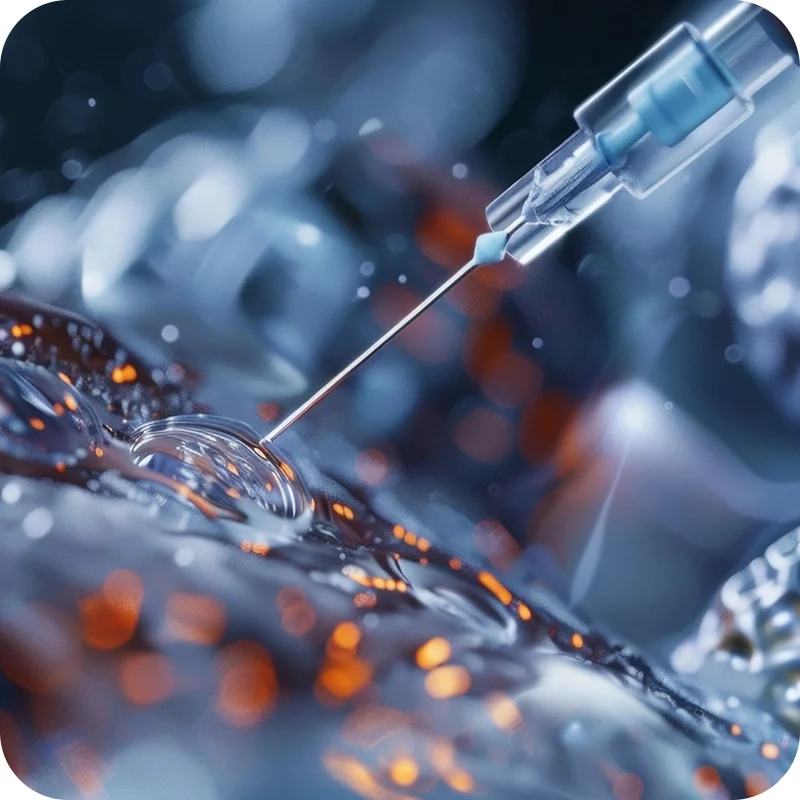
At Pain Treatment MD, bone marrow is gently aspirated using a specialized needle from the back of the hip (iliac crest). To make the procedure comfortable, the area is numbed before procedure. After aspiration, the bone marrow content is processed in a centrifuge, which spins and separates the stem cells. With the help of image guiding, the concentrated stem cell solution is then carefully injected into the injured tissue. As these cells are taken from your own body (autologous), the risk of allergic reaction is generally low.
These treatments may be considered for certain patients with:
These therapies are not appropriate for everyone and may not be recommended for severe, end-stage arthritis or when there is significant structural damage requiring surgery.
Dr. Jain will review your imaging, exam, and history to decide whether this approach makes sense for you or if another treatment is safer and more effective.
Stem cell Therapy is a good option for those individuals
Through proper assessment and consultation, pain physician decides whether this therapy is reasonable and safe in your case.
This is the initial step of procedure. Complete health assessment s performed through medical history, physical examination, and review of imaging such as X-rays, MRI, or ultrasound. Pain management physician Discusses all available treatment options (conservative care, medications, injections, surgery, PRP, etc.) along with its Review of risks, benefits, costs, and realistic expectations.
You are positioned comfortably, and the skin over the back of the hip (posterior iliac crest) is cleaned and numbed with local anesthetic. For bone marrow aspiration, a specialized needle is gently advanced into the bone marrow space. Now Bone marrow is drawn (aspirated) into syringes. You may feel pressure or brief discomfort, but most patients tolerate this step well.
Now for stem cell preparation, the aspirated bone marrow content is placed into a machine called centrifuge. The centrifuge spins and concentrates important cells and growth factors into a smaller volume, often called bone marrow aspirate concentrate (BMAC). The final concentrate is drawn into sterile syringes for injection.
The skin over the treatment site (joint, tendon, ligament, or spine structure) is cleaned and numbed. Using ultrasound and/or fluoroscopic guidance, Dr. Jain positions the needle precisely into the appropriate structure. The prepared concentrate is slowly injected into the targeted area.
Once the procedure is performed, patient is observed for little time. It’s a daycare procedure and patients are sent back to home same day with proper post procedure instructions and follow up.
Immediately After procedure: Temporary soreness, pressure, or a “full” feeling at both the hip harvest site and the treatment area is common. Mild bruising can occur. Some patients notice an initial increase in discomfort as the biologic response begins.
Short-Term Recovery (First 1–2 Weeks) – You may be asked to limit high-impact or strenuous activities involving the treated area for a period of time. We typically recommend avoiding anti-inflammatory medications (like ibuprofen or naproxen) before and after the procedure, as they may interfere with the regenerative response. Acetaminophen (Tylenol) and ice may be used as directed. A gradual return to normal activities is usually recommended, supported by an appropriate home exercise or physical therapy program.
Longer-Term Improvement: This is not an instant “numbing” injection. Improvement usually occurs gradually. – Some patients begin noticing changes over 4–8 weeks, with potential continued improvement over 3–6 months or longer. – Results vary widely, and some patients may not experience meaningful benefit.
There are many potential benefits of stem cell therapy when selected carefully.
Risks and side effects are part of almost every procedure. Similarly, in case of stem cell therapy there are certain risks and side effects which are mentioned below.
At Pain treatment MD, our team carefully review your medical history to reduce risks and explain all potential complications before the procedure.
Number of treatment depends upon medical condition of patient. In some cases patients undergo a single treatment and are monitored over several months. While in other cases, a staged or repeat procedure might be discussed depending on your response and ongoing symptoms. The need for additional treatments is individualized and based on clinical response, imaging findings, and patient’s choice.
Before the procedure, our team will give you instructions that may include: Which medications to stop or adjust (such as blood thinners or anti-inflammatories), always in coordination with your prescribing providers. Staying well hydrated and eating a light meal (unless instructed otherwise). Arriving early for consent, paperwork, and preprocedure checks. Arranging transportation if you are receiving any sedative medications or do not feel comfortable driving afterward.
Both PRP and stem cell–based therapies are considered regenerative or “orthobiologic” treatments.
PRP primarily concentrates platelets and growth factors from your blood. Bone marrow–derived therapies provide a mixture of cells (including mesenchymal stem cell–like cells), platelets, and other factors. In some cases, PRP may be sufficient and less invasive. In others, stem cell–based therapy may be considered.
Dr. Jain will help you understand which approach, if any, is appropriate for your specific condition.
There may be brief discomfort during the bone marrow harvest and injection despite local anesthetic. Most patients tolerate it well. Some soreness afterward is normal and usually manageable with recommended measures.
Most regenerative and stem cell–based procedures for orthopedic and pain conditions are not covered by insurance at this time and are typically self-pay. Our office will provide you with cost information and payment options in advance.
Plan on being in the office for about 2–3 hours to allow for check-in, bone marrow harvest, processing, the injection, and brief observation afterward.
Some patients begin noticing changes within a few weeks, but it often takes several months to fully evaluate the response. To monitor progress, follow-up visits are scheduled.
Yes. Regenerative procedures are often combined with physical therapy, exercise, bracing, weight management, and other pain management treatments to optimize overall results.
Schedule a Consultation If you are interested in whether stem cell–based regenerative therapy could be an option for your pain, we would be happy to evaluate your case.

We make customized treatment plans according to your individual needs to target what works best for you.
We believe in holistic pain management, incorporating medicine, lifestyle changes and advanced treatments to manage pain.
Our goal is to listen and understand your pain and achieve your health goals for you to regain control over your life.