

Tennis elbow is a musculoskeletal condition that affects the tendons on the outer side of the elbow. It is a repetitive stress injury and is associated with repeated forearm movements in extension. Clinically, it is known as lateral epicondylitis. Patients suffering from tennis elbow usually experience pain outside of the elbow, reduced grip strength, and discomfort during daily activities. From a medical standpoint, elbow tendonitis occurs when microscopic tears develop in the extensor tendons of the forearm, which are attached to the lateral epicondyle of the arm bone. When not managed timely these tears lead to chronic discomfort and pain. While many people assume it is a condition that affects athletes, in reality, it’s not the case. It can occur in individuals who perform repetitive manual tasks.
Without timely intervention, tennis elbow can affect your daily life, including occupational and recreational functions. This guide will help you understand in detail what tennis elbow is, what causes tennis elbow, and what the symptoms of tennis elbow are. Additionally, we will explore a few treatment approaches that can relieve pain and symptoms associated with tennis elbow.
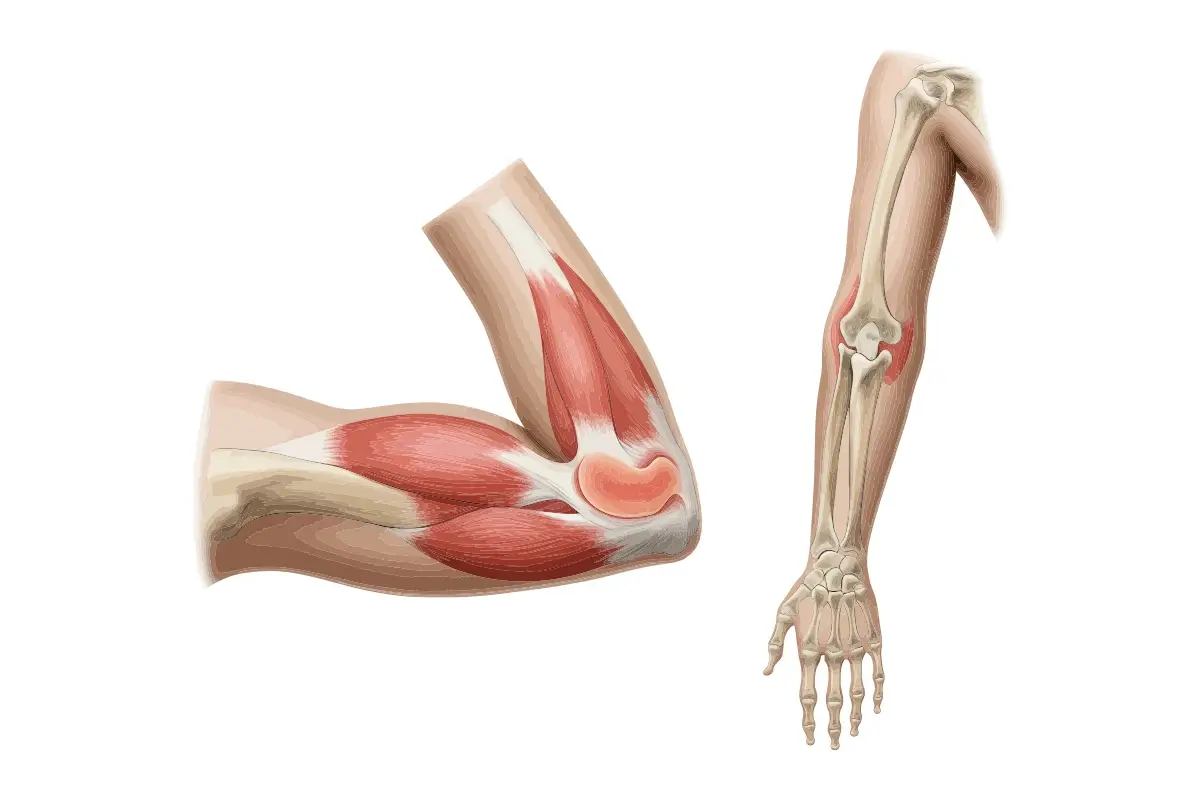
The elbow joint connects your upper arm to the forearm and is a hinge joint type variety in human joints. These bones and joints play an important role in many of your daily movements, such as gripping, twisting, lifting, and cutting. It is formed by three bones, the humerus (the bone of the upper arm) and the radius and ulna (the two bones in the forearm). These bones together make the bending and straightening of the elbow smooth. They also work to bring about rotation of the forearm.
 Muscles that cross the elbow joint are mostly attached to the lateral and medial sides of the elbow, known as the lateral and medial epicondyles, respectively. The outer side of your elbow is the lateral epicondyle, which gives attachment to the common wrist extensor muscles, specifically the Extensor Carpi Radialis Brevis (ECRB). These muscles stabilize the hand during your gripping activities and extend your wrist. In tennis elbow, the overuse of wrist extensors causes micro tears and degeneration of the ECRB on its attachment. This causes localized pain and weakness around the outer elbow or forearm pain near the elbow, leading to the development of tennis elbow.

The terms lateral epicondylitis, elbow tendonitis, and Tendinitis in the elbow are often used interchangeably, but all these relate to the same clinical presentation.
Tennis elbow involves degeneration of the extensor carpi radialis brevis muscle tendon at the outer side of the elbow due to repetitive eccentric loading. Eccentric loading means slowly stretching a muscle or tendon while it is under tension. Medical literature now favours the term epicondylitis to reflect chronic tendon degeneration.
While the word tendonitis represents an acute inflammation due to the “itis” suffix, chronic tennis elbow causes degeneration of tendon fibres, microscopic tears, and disorganized collagen of the extensor carpi radialis brevis (ECRB) tendon, without true inflammation. In medical terminology, this is known as tendinosis. Â Regardless of the pathology, tennis elbow remains the most common and recognized term to describe lateral forearm pain and elbow dysfunction.

Patients with elbow pain often ask one question, where does tennis elbow hurt? The pain typically occurs on the outer side of the elbow on a bony area called the lateral epicondyle. The lateral epicondyle gives attachment to the Extensor Carpi Radialis Brevis, which is the main muscle affected in this condition. The muscle acts to stabilize the wrist when the elbow is straight. This outer elbow pain is often experienced more during any gripping or lifting activities. Deep aching discomfort and pain worsening with activity is something patients frequently describe as what tennis elbow feels like.
In the early stages, tennis elbow symptoms occur with repetitive movements, but as time progresses, the pain may occur even at rest. Persistent pain indicates the progression of the disease into a chronic stage. The pain and elbow tendonitis symptoms can:

Tennis elbow presents very distinct clinical signs during examination. The main symptom is tenderness (pain when touched) on the lateral epicondyle.
These signs signal structural fatigue in the elbow and must be treated in a timely manner. Early-stage treatment allows for non-invasive approaches to be much more effective before the muscle and joint condition reaches a severe stage.
The symptoms usually produce discomfort in the dominant hand, but can also affect the non-dominant hand. Typically, the nature of pain in tennis elbow feels like:
The tennis elbow symptoms may also irritate the elbow joint capsule, leading to stiffness, which many patients often perceive as joint pain. Every day activities potentially trigger elbow tendon pain when you:
These activities put repeated stress on the tendons attached to the elbow, therefore creating symptoms of severe tennis elbow.

| Stage | Presenting Symptoms |
|---|---|
| I | Sharp pain after heavy activities that resolves after rest All movements are complete Muscle strength is not affected Marks temporary inflammation Micro tears heal with simple rest The ECRB tendon is irritated, but there is no damage |
| II | Persistent pain with heavy activities and doesn’t go away with rest Grip strength starts to weaken Morning stiffness The micro tears fail to heal A healthy tendon shows disorganized grey scar-like tissue Termed as Angio fibroblastic Degeneration, showing increased fibroblast activity, and vascular hyperplasia |
| III | Intense stabbing pain during activities Radiating pain in forearm near elbow Significant loss in grip strength (objects drop) Marks structural changes The ECRB tendon begins to tear partially or fully |
| IV | Constant dull pain, sharp pain even with light activities Severe weakness in hand strength Stage of advanced fibrosis & calcification ECRB tissue becomes hard and calcified (calcium deposits) Conservative treatments fail to relieve symptoms Pain even at rest |

If only athletes did not suffer from tennis elbow, then what causes tennis elbow? The answer is one and simple, repetitive motion. The main underlying cause of tennis elbow is repetitive wrist extension with forceful gripping and overuse of forearm muscles. The biomechanics of tennis elbow involve the failure of the tendon to adapt to the load placed upon it.  Additionally following factors may contribute to excessive strain in ECRB tendon pain:
More risk factors for lateral epicondylitis include:
If you fall into these high-risk categories, paying close attention to any outer elbow pain is crucial. By managing these risk factors and strengthening the surrounding musculature, you can significantly reduce the chances of developing a painful and persistent case of tennis elbow.

A thorough clinical evaluation by a pain specialist can confirm the diagnosis of Tennis elbow. Based on your medical history and detailed questions related to your activity levels and the onset of symptoms, your physician may diagnose your condition.
Diagnostic procedures for Tennis elbow, based on the severity, may include:
Physical examination, in which your examiner may put pressure on the affected site to confirm the tennis elbow pain location.
Provocative tests that provoke pain and confirm tennis elbow. Commonly used ones are the Function Grip Test and Cozen’s Test.
Imaging techniques including MRI, X-ray, and Ultrasound.
Often, the symptoms of tennis elbow can overlap with other conditions like radial tunnel syndrome, cervical radiculopathy, or elbow osteoarthritis. Timely and correct diagnosis makes the choice of effective pain treatment options easy.

After the assessment of tennis elbow and confirmation, your pain treatment expert may suggest a personalized treatment plan based on your symptoms.
The ultimate goal is to follow a comprehensive approach and care for joint pain and help the patient return to daily activities.

Weather changes can significantly affect those already suffering from tennis elbow. While the weather doesn’t directly cause tennis elbow, it can affect its symptoms and severity. The prescribed joint pain treatments during this seasonal transition can help maintain comfort and mobility, and live a pain-free life. The weather changes that involve changes in pressure or cold fronts can cause the tissues in the elbow joint to expand and contract. This shift produces pressure on the inflamed tendon, which worsens the sensations associated with tennis elbow. That’s why many patients report that their tennis elbow symptoms worsen or become more achy or stiff during humid summer days or cold winter days.
Weather effects can be frustrating for those with tennis elbow. It is recommended to keep the affected elbow warm and supported during cold and humid weather to maintain circulation.
Tasks that are repetitive, like gripping, lifting, or twisting, using a computer mouse, turning doorknobs, gardening, or scrubbing surfaces, can worsen tennis elbow symptoms. Sometimes even lifting a heavy mug can strain the affected forearm tendons. The repeated stress prevents micro tears from healing, hence increasing your chronic outer elbow pain.
Kenneth’s elbow is very rare in children, though it occurs in youth who are highly active. It particularly happens due to overuse in sports that use a racket or due to improper biomechanics during repetitive activities. In teens, it may manifest as Little League Elbow, which involves the growth plate. Therefore, Proper evaluation is necessary to confirm the diagnosis.
Yes, the difference between tennis elbow and golfer’s elbow is primarily the location. Tennis elbow or lateral epicondylitis affects the outer or lateral side of the elbow joint, where the extensor tendons attach. Golfer’s elbow or medial epicondylitis affects the inside of the elbow, where the flexor of the forearm is attached. The damage to either flexor or extensor tendons may result in respective conditions.
Yes, Tennis elbow can affect other joints or muscles over time. Due to weakness in the forearm and avoid elbow pain, many patients perform compensatory movements and subconsciously try to perform movements using the wrist or strain the shoulder joint. This, over time, may lead to shoulder strain, wrist instability, or upper back tension. The shoulder overwork due to forearm weakness may potentially cause secondary pain in the shoulders or pain that radiates down to the hand and fingers.
Tennis elbow is a totally manageable condition, with a combination therapy including rest, pain management, activity modification, and professional medical care. Whether your symptoms have developed due to repetitive work strain or your athletic pursuits, identifying tennis elbow pain at an early stage can give you fruitful results in recovery. Treatment of tennis elbow pain under the supervision of specialized pain treatment experts can prevent this condition from becoming a chronic disability. Modern advancements in joint pain offer a hopeful outlook towards full recovery and return to function. So, if you want to move, lift, and work without that constant discomforting reminder in your elbow, then this is your chance to contact PTMD pain treatment experts now. Because when you address pain early, you protect your mobility for years to come.