

Repetitive strain injuries (RSIs) are caused by overuse of a muscle or tendon and are becoming increasingly common.Activities like typing on a keyboard, scrolling on a phone, playing games, knitting, use of vibratory tools, playing musical instruments and poor wrist posture are the contributing factors to RSIs. Among these, Carpal Tunnel Syndrome (CTS) is one of the most common conditions affecting the hands and wrists.
Carpal Tunnel Syndrome develops when the median nerve, which passes through the carpal tunnel in the wrist, becomes compressed. The resulting symptoms tingling, numbness, weakness, and persistent hand pain, can interfere with the productivity of individuals affected by it. According to a study, CTS is the most common focal mononeuropathy, making up about 90% of all neuropathy cases. This blog provides a detailed exploration of what Carpal Tunnel Syndrome is, the reasons why it develops, the symptoms to watch for, and the treatment options available to relieve and prevent hand pain.

To know what is carpal tunnel syndrome, it is also essential that you know the basic anatomy of your wrist. The carpal tunnel is a narrow pathway or passage formed by the bones and ligaments in the wrists. This tunnel gives place to the median nerve, which mainly controls the movements and sensations in your hand.
The median nerve supplies motor innervation for thumb opposition, abduction, and flexion, and for flexion of the index and middle fingers. It provides sensory supply to the thumb, index finger, middle finger, and lateral half of the ring finger on the palmar (anterior) surface of the hand.
The tendons that control your finger movements also pass through this tunnel. Therefore, any swelling, irritation or pressure in this area can lead to median nerve compression and produce symptoms of discomfort, weakness and numbness.
The anatomy helps understand the carpal tunnel pain location as well, and why you typically experience it in the thumb, fingers and wrist. In severe and advanced cases, this pain can also radiate up to the arm and even the shoulder and can affect your daily productivity.
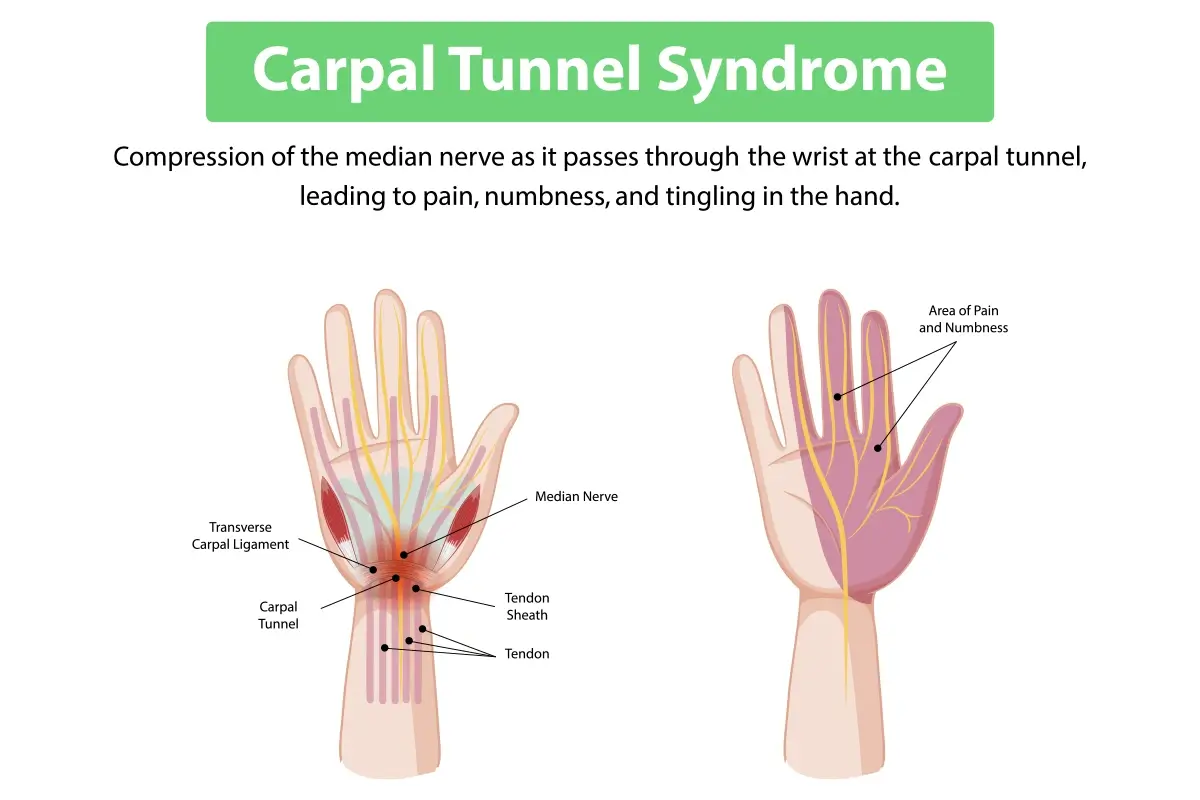
The carpal tunnel is a passage or pathway in your wrist joint. The carpal bones make up the three sides, and on one side, it is covered by a tough band of tissue called the Transverse carpal ligament. The presence of bone and rigid ligament makes this tunnel a rigid passage, hence very little space for the movement of the tendons or the median nerve present inside it.
If, for any reason that we will discuss later, the space inside this tunnel narrows due to swelling or any other reason, it can cause compression on the median nerve and affect the nerve’s ability to send clear signals to the brain for movement and sensations. This phenomenon can be understood as water coming out of your garden hose, and as you step on it, the water coming out is reduced due to the compression on the garden hose.

Now that you know what is carpel Tunnel, let’s understand what causes carpal tunnel Syndrome . Furthermore, understanding and identifying the cause can help to plan prevention and management. Carpal tunnel syndrome causes mainly include:
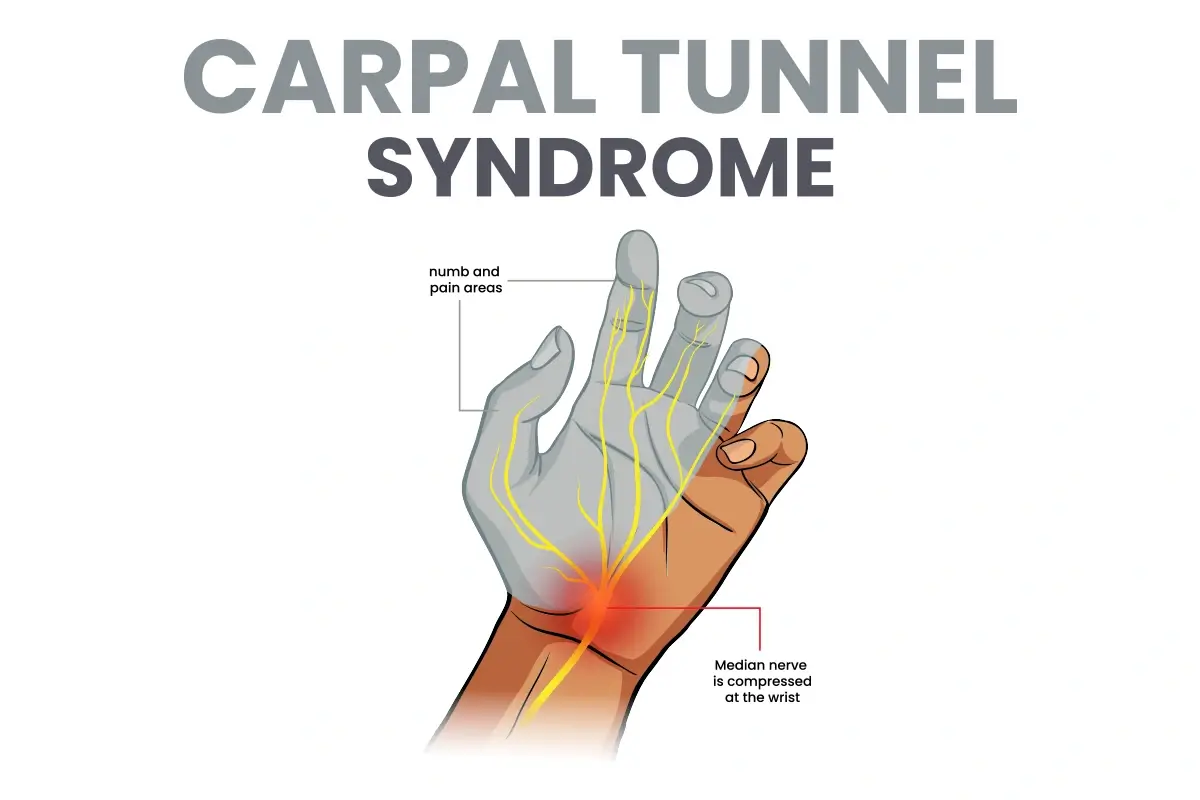
Symptoms of carpal tunnel syndrome can vary depending on the severity of progression. In the early stages, symptoms of occasional tingling and mild carpal tunnel pain at night are felt by patients. The impact on hand function is minimal at this stage. As the disease progresses, you might feel persistent numbness along the distribution of the radial nerve, and your hand grip may become weak. Additionally, you may also experience difficulty in performing fine motor tasks. When left untreated medium nerve compression can become severe and present the symptoms of constant pain and tingling in the wrist and hand with significant hand weakness. The degree of progression includes:
The Above symptoms often worsen with performing repetitive hand movements like the use of a mouse, assembly work, or typing, holding a or using steering wheel for long periods or when your wrists are bent while sleeping.
The chronic compression of the median nerve leading to thenar atrophy (muscles at the base of the thumb) may also cause permanent loss of hand function. Therefore, it is important to seek timely evaluation.
Sensory symptoms are usually experienced very early in Carpal Tunnel Syndrome. The symptoms usually come and go, and are not permanent, but may present continuously in progressive stage. Common sensory symptoms show up as:
The hand weakness and grip strength loss follow a distinct median nerve-specific pattern.
Surprisingly, Carpal tunnel syndrome can also cause referred pain to the shoulder. CTS patients may compensate for their weak hand movement by overusing their shoulder and neck muscles. As a result, this produces secondary strain in the upper body. If you experience shoulder pain alongside thumb numbness, it is highly worthy to ask your doctor if it is due to wrist pain.

The diagnosis of carpal tunnel syndrome usually involves multiple channels.
These are some special tests that help to identify specific signs of carpal tunnel. Tinel’s Sign, Phalen’s Maneuver and Two-Point Discrimination tests are usually performed.
Tiny electrodes are placed on your skin, and then an electrical pulse is sent through the median nerve. The nerve conduction studies measure how fast the signal travels. If there’s media nerve compression, the signal slows down significantly as it passes through the wrist.
EMG measures the electrical activity of muscles and is often combined with nerve conduction studies (NCS) to evaluate CTS.
Ultrasound or MRI is used to identify any structural changes, such as tumors or cysts, in the wrist joint. The ultrasound measures the cross-sectional area of the nerve to confirm median nerve compression.

Carpal tunnel syndrome treatment usually involves a mix of conservative lifestyle adjustments and advanced pain management strategies. In severe cases, surgical intervention can also be considered. Symptoms of carpal tunnel syndrome can be effectively controlled with the combination of these approaches, which work on one main goal, i.e., to reduce the pressure on the median nerve and lessen chronic discomfort. A comprehensive summary of treatment options that can benefit patients with carpal tunnel syndrome are:
When all conservative methods fail, surgical release of the median nerve is done by cutting the transverse carpal ligament to permanently increase the space for the median nerve.
Every patient’s presenting condition is different, and treatment should be tailored accordingly; it is essential to consult pain management specialist to find out what treatment best suits your specific symptoms.

Recovery depends on the severity of the median nerve compression. For those using non-surgical methods, improvement may be seen within a few weeks of consistent splinting and activity modification. In the event of surgery, hand strength and function may return within 2-3 months, but in some cases may take up to a year.

Learning how to prevent carpal tunnel is much easier than searching for treatment options once the condition has progressed to the chronic stage. Whether you are an office worker or a factory employee, the tips below can save you from developing repetitive stress injuries.
Experiencing numbness, tingling, or persistent wrist pain can be really uncomfortable and can be symptoms of Carpal Tunnel Syndrome (CTS). This condition affects thousands of people in the US and around the globe. In Arkansas, Pain Treatment MD experts understand how disruptive wrist pain or any other chronic pain condition is to everyday life.
Though surgical treatments can be opted for conditions like Carpal Tunnel Syndrome, people who are searching for minimally or non-invasive recovery can contact Pain Treatment MD in Arkansas. The pain treatment experts here treat neuropathy pain, utilizing advanced interventional techniques to calm inflamed nerves and restore hand function. With a combined treatment approach using advanced medical technology and individualized therapy, Pain Treatment MD can help you regain a pain-free life. Schedule a consultation or visit our clinic to step into the interventional approach towards lasting pain relief.
Many individuals often ignore when they experience symptoms of tingling or burning, taking it as trivial, just a little discomfort. However, you should understand that your nerves are extremely delicate. Here is a detailed list of when you should consult a specialist to evaluate for carpal tunnel syndrome
The best way to prevent your nerves and muscles from permanent damage is to seek early intervention and treatment so that your simple discomfort doesn’t go into a state of chronic disability.
Daily habits that worsen Carpal tunnel syndrome usually include those that put pressure on your wrist. Typing, tight gripping activities, using heavy tools, gaming and texting are some of them. Additionally, keeping your wrist against a hard surface or specific posture for a prolonged times like bent up down or sideways, can also worsen carpal tunnel symptoms.
Ergonomic adjustments at work help to keep your wrists in a neutral position. Chair and table height adjustments, taking regular breaks, using padded mouse cushions, and regular stretching during work all help to relieve pressure on the median nerve in your wrist and ultimately improve carpal tunnel syndrome symptoms.
Yes, exercises that keep your hand and wrist muscles mobile and improve their strength can help reduce hand and wrist tension. These include wrist flexion and extension, nerve and tendon gliding exercises, stretching, squeezing and weight-bearing exercises to improve muscle strength and prevent injuries.
Diet alone cannot cure carpal tunnel symptoms, but yes, it can play an essential role in supporting overall nerve health and reduce severity of conditions. Foods containing vitamin B (B1, B6, B12 and Folate) support nerve function. Maintaining a healthy weight, stable blood sugar, and an anti-inflammatory diet that consists of omega fatty acids and antioxidants can help to support nerve as well as overall health of an individual.
Carpal tunnel syndrome is the most prevalent nerve entrapment neuropathy. With a 1 to 5% incidence in the general population, with a female-to-male ratio of 3:1 and rare in children, the risk is increased in people who are obese or in women who are pregnant. Its symptoms can worsen if they are not timely addressed. In many cases, a single treatment approach gives outstanding results, while others may require various healthcare specialists or a multidisciplinary pain treatment approach to control symptoms. A multidisciplinary approach to pain treatment supports timely diagnosis and management, leading to earlier functional recovery.